
(Fourth and Final Part of a Multipart Series
History’s Hidden Figures: The Women We Were Made to Forget)
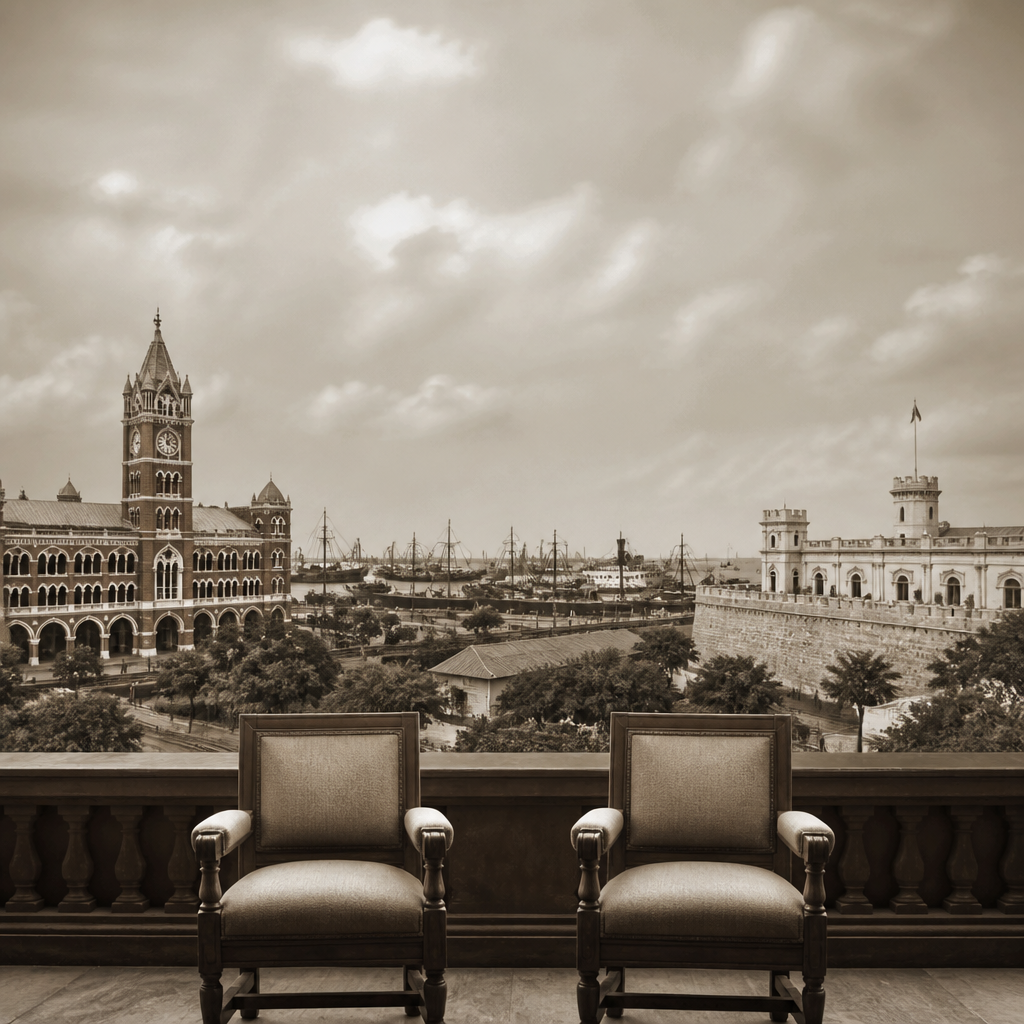
They lived in the same city, walked the same corridors of power, founded institutions that still stand, fought the same battles for women. Yet our textbooks rarely tell their history or ever documented if they ever once sat across and spoke to each other.
Durgabai Deshmukh and Dr Muthulakshmi Reddy: two women who changed the face of Indian medicine, society, and law. Their names should have been well-known in every classroom of Chennai. May 9th is the 45th death anniversary of Durgabai. Today, I attempted to trace their legacies, before they fade entirely.
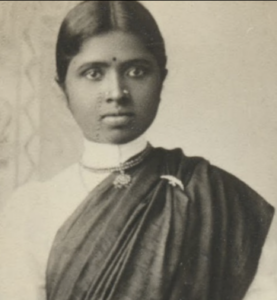 (Dr Muthulakshmi Reddy)
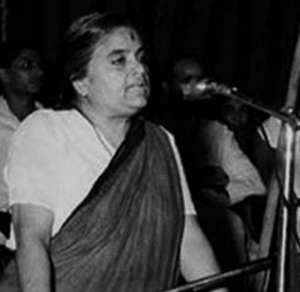 (Durgabai Deshmukh)
The Doctor-Lawyer
Dr Muthulakshmi Reddy was born in 1886 in rural Tamil Nadu to a woman from an oppressed caste. The stigma of that parentage could have sealed her fate. She was supposed to marry young and disappear into domesticity.
Instead, at 13, when society demanded that Muthulakshmi must leave school, she refused. Her kind father home tutored her. Soon, she applied to Maharaja’s College, a men’s college, which refused her a seat, that is until the Maharaja himself intervened. In 1907, she became the first student in the surgery department of Madras Medical College. Graduating in 1912 with gold medals, she picked up law books. By then, she had realized that healing one patient at a time was not enough. She had decided to cure society of caste, religious, and gendered oppression. She worked to abolish child marriage and demanded women’s suffrage.
Dr Muthulakshmi became the first Chairperson of the State Social Welfare Advisory Board, the first woman Deputy President of the Madras Presidency’s Legislative Council. Also, by entering the Madras Corporation, she became the first woman legislator in British India. She was the author of numerous books and pamphlets. She founded the Avvai Home for rescued destitute girls and the Adyar Cancer Institute. The Kasturba Hospital at Triplicane is a fruit of her efforts. She fought to abolish social evils while practicing medicine and navigating doors never meant for women like her. In 1956, she was honored with the Padma Bhushan.
The Child-Bride Who Walked Out to a Career in Law
Durgabai Deshmukh, born in 1909 in Andhra Pradesh, was married off at eight. At 15, she walked out, negotiating her own release.
At 12, she crowdfunded an assembly so she could listen to Mr Gandhi talk. She joined the Indian freedom struggle and was jailed for treason. In prison, she met wrongfully convicted women, illiterate and unable to access legal defense. She emerged determined to study law.
Graduating in Political Science and armed with a law degree from Madras University in 1942, Durgabai became a pioneer woman criminal lawyer. In 1937, she founded the Andhra Mahila Sabha in Chennai, which ran a nurse-midwife training program and offered education and healthcare to the poor. She worked in the Constituent Assembly, moving 750 amendments. She built the Central Social Welfare Board, a network of over 30,000 NGOs. She also founded the Family Courts system of India and authored many books. Durgabai was honored with the Nehru Literacy Award, the UNESCO Award (for her work in literacy) and a Padma Vibhushan in 1975.
Parallel Lives
Reading their stories side by side, I note that their lives were eerily similar.
Both navigated marriage on their own terms. When Muthulakshmi finally said yes at 28, it was on strict conditions of equality. Durgabai simply left, barely 15, negotiating her own freedom. She later married a prominent politician.
Both women chose law to arrive at their lives’ purpose. Both were staunch Gandhians. Both of them must have been the only women in rooms full of men. They also died receiving less accolades than they deserved. Muthulakshmi’s house inside Avvai Home is now dilapidated. The Lattice Bridge (L.B.) Road in Adyar is actually Dr Muthulakshmi Reddy Road. Durgabai’s name also survives on a traffic sign in Chennai today that still shows Durgabai Deshmukh Road near Adyar.
The institutions they both built still stand: Avvai Home, the Andhra Mahila Sabha, and the Adyar Cancer Institute, all still helping thousands, across generations.
The Silence Between Them
Here is what I cannot stop wondering:
They lived in the same city. Dr Muthulakshmi was 23 years older and by the time Durgabai led the Salt Satyagraha, Muthulakshmi was already a legend. When Durgabai sat in the Constituent Assembly, Muthulakshmi was in her 60’s, still working as a doctor and building Madras.
Both women moved in the same reformist-women’s-welfare and Congress party circles. They must have known each other. But I’ve found no records: neither letters nor a single photograph… not even a mere mention in newspapers.
Perhaps they met only briefly, nodding across a room full of men, too busy to stop. Perhaps they told themselves there would “catch up” later, like women still do these days that there would be time later to sit and talk.
Imagined Camaraderie
I often imagine them sitting together. They must have exchanged stories of prison cells, courtrooms, medical neglect of women, and men who tried to stop their work. I also imagine them returning to their work: Dr Muthulakshmi to her hospital and Durgabai to her Constituent Assembly.
I see this absence any record of their association as a failure of a society whose memory is skewed. I write their names together now, because no one did then.
The Real Erasure
If at all they really met… often and warmly, what if the fact was that no one documented those meetings! Two women, talking law was not record-worthy. Who would preserve that? The archives are full of men’s speeches, letters, and pictures of handshakes. Two extraordinary women could have met every week for fifty years. That still would not have made it to a single footnote.
That is the real erasure.
What Can We Do Today
My hurt is not that that we forgot their names, but that we still do not document and celebrate women’s friendships. We skip the fact that women have friends. We forget we have and are those friends, allies, and companions in our everyday fight. We isolate brilliant women… even when we record their stories. We need to stop making solo geniuses and lone superheroes out of extraordinary women!
Maybe, we do this because we cannot imagine a community of brilliant women. We cannot conjure up space for all of them.
The real question is “Why do we still do that?”
Dr Muthulakshmi Reddy died on July 22, 1968, and Durgabai Deshmukh on May 9, 1981. Together, or in parallel, they reshaped Chennai.
Storyteller


Other posts
-


Swetha Sree Kannan
- 21 Oct 2026
- 4 min read
-

Swetha Sree Kannan
- 21 Oct 2026
- 5 min read
-

Sunil Kolakunnath
- 29 Sep 2026
- 4 min read