Rebuilding a Founder-Led Practice One Phase at a Time

The moon changes shape every night and never stops being the moon.
Over two decades, Gambhir Cosmetic Medicine built trust through physician-led aesthetic care. As its founders prepared to expand to new locations, they needed a brand that could sustain that trust independently. Toss The Coin led the rebrand through PRISM+, a five-phase framework that moves from research to a complete brand system.

Gambhir Cosmetic Medicine is a U.S.-based medical aesthetics practice offering injectables, skin and laser treatments, and regenerative care. It built a loyal patient base through honest guidance, natural-looking outcomes, and the judgment to decline treatment when it did not serve the patient.
The brand depended on its founders. Every new location raised the same question: would the standard of care hold when the founders were no longer personally present? Discount-driven, procedure-focused marketing made the practice's clinical expertise appear just transactional.

Five phases. One brand.
Toss The Coin structured the engagement through PRISM+. Each phase builds on the last. Nothing is designed before it is understood, and nothing is expressed before it is positioned.
What nearly 1,400 patients told us
Before developing a name, logo, or color palette, we examined what patients were already telling us. The audit showed that discount-driven, procedure-focused marketing was overshadowing the practice's distinctive philosophy of care. Perception data told a different story: strong ratings, a high volume of reviews, and feedback emphasizing calmness, professionalism, and nonjudgmental care.
The survey generated approximately 1,400 patient responses. More than 62% of patients chose the practice for natural, undetectable results. Across patient segments, as many as 99% of respondents identified honest guidance as a core expectation.

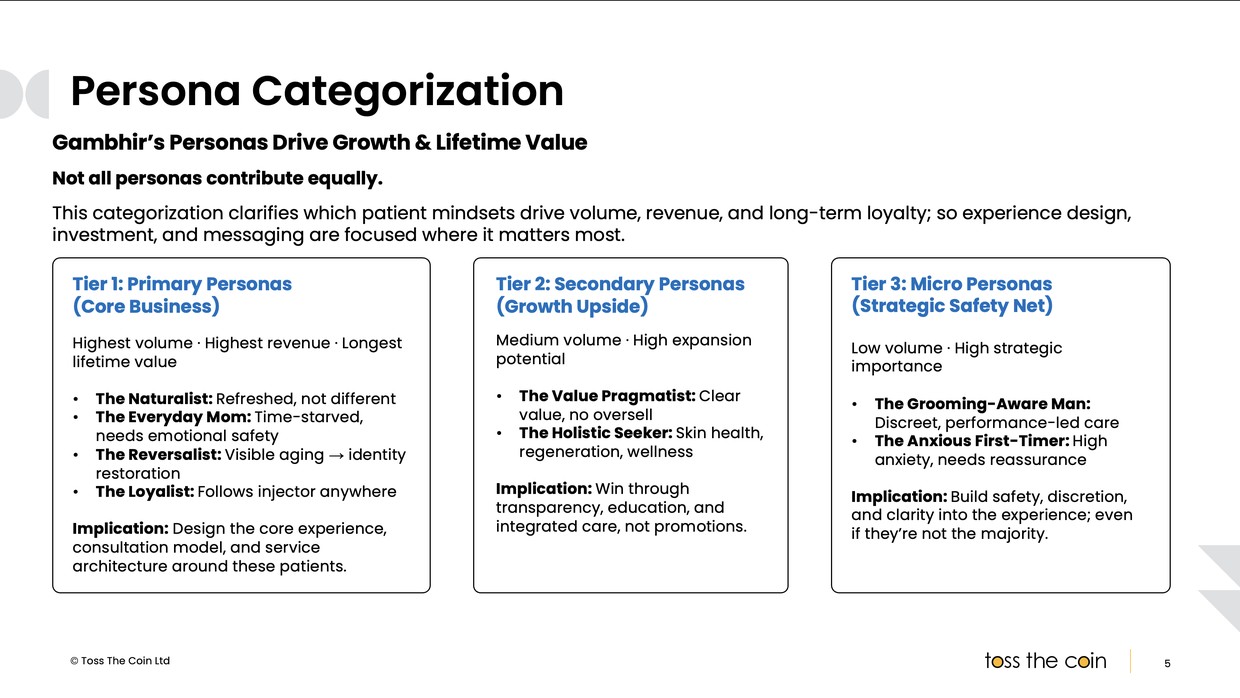
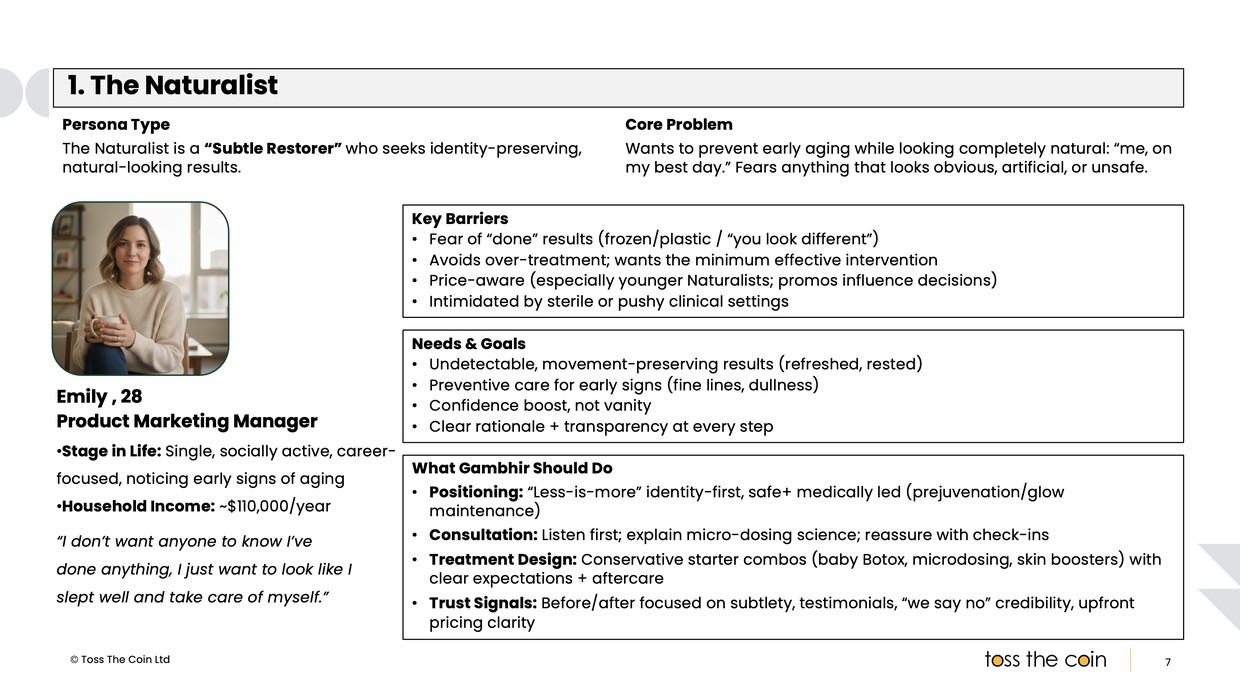
Eight personas. Three tiers.
The survey identified eight patient personas across three tiers: loyal patients motivated by trust and ongoing maintenance, patients whose confidence could grow with more education, and cautious first-time patients who required a lower-pressure introduction before booking. Journey mapping identified the messages, resources, and touchpoints Lunamé would need at each stage.
What the research produced
The research pointed to one defining idea: Restraint is a form of expertise.
That idea became the foundation for the naming, visual identity, and positioning explored in the rest of this series.
success story?